POSTPARTUM COMFORT · 8 MINUTE READ
Why the postpartum support you wanted can become another bulky layer you stop wearing
The missing detail is not stronger compression. It is the difference between a separate band that squeezes and crossed support built into something you already wear.

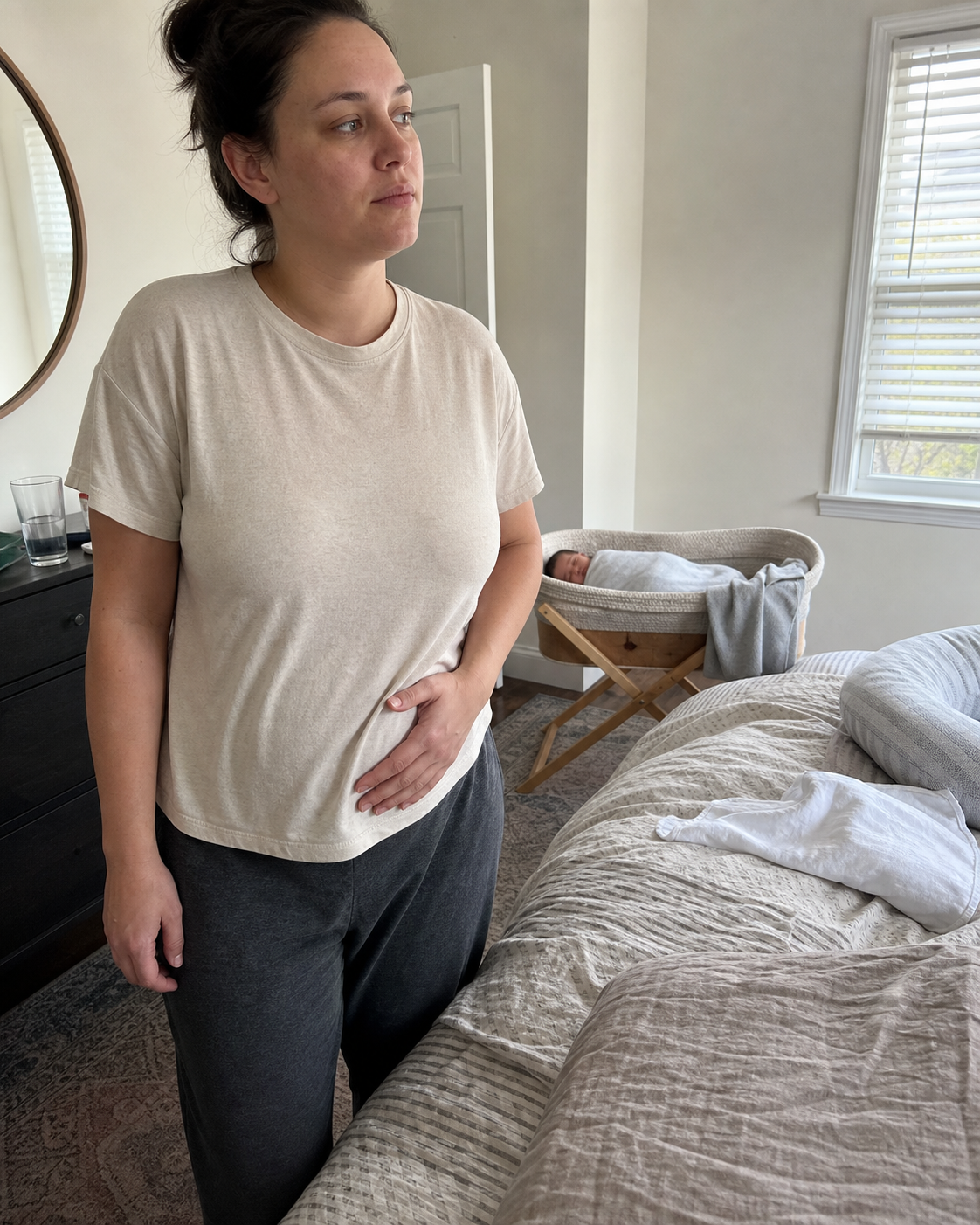
There is a particular moment many new mothers recognize. You finish a feed, place the baby down safely, stand up and instinctively rest a hand over your middle. You are not asking for a dramatic transformation. You just want to feel a little more held as you move into the next part of the day.
That is often when a postpartum wrap starts to sound appealing. The promise feels simple: put it on, feel supported and stop thinking about your midsection for a while.
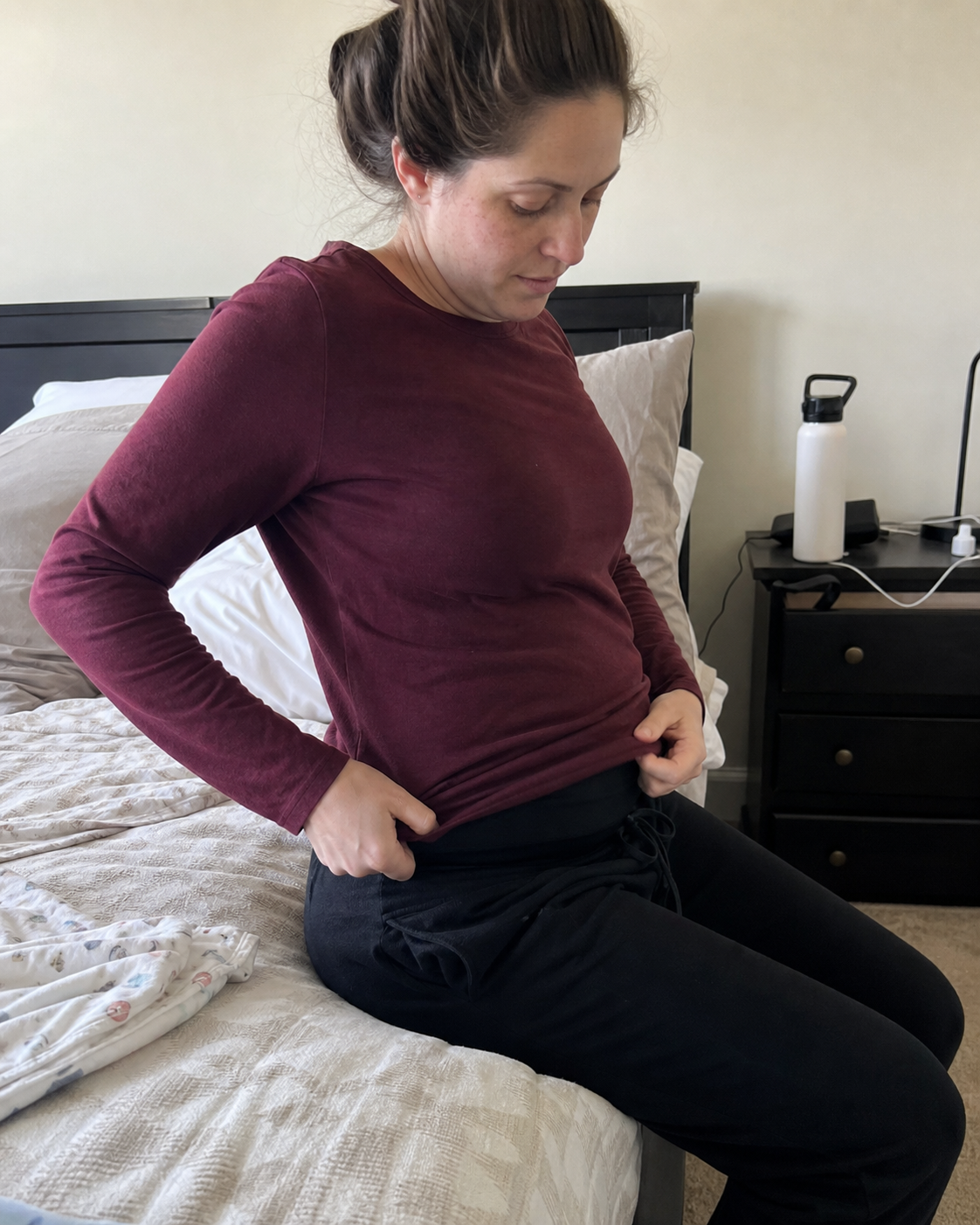
But the reality can become more complicated. The band that felt reassuring while you were standing may feel completely different once you sit to feed. It can become obvious under a T-shirt, shift when you bend toward the bassinet or turn getting dressed into a negotiation between your body, the wrap and your clothes.
The problem is not necessarily that you chose the wrong size
Most conventional wraps are built around one broad idea: apply pressure across the front of the abdomen. If the garment feels loose, tighten it. If the pressure changes when you sit, loosen it. If it shows through your clothes, add another layer over it.
That can create a temporarily smaller-looking middle while the wrap is fastened, but appearance and day-to-day wearability are not the same thing. A product can look convincing in a product photo and still ask too much of you once your body begins moving through real positions.

Why so many wraps quietly end up in a drawer
You may begin with every intention of wearing one regularly. Then the small frictions collect. The hook-and-loop fastening catches. The edge is visible beneath a top. The band feels different while sitting than it did while standing. You remove it for a feed and do not put it back on. Soon it becomes one more postpartum purchase you meant to use.
This is not a failure of discipline. New motherhood already creates enough mental load. A support product has to fit into the day you actually have, not the perfectly organized routine shown in an advertisement.
More squeeze is not the same as a better support pattern
A flat panel asks the whole front of your midsection to accept broadly similar pressure. Tightening it increases the squeeze, but it does not change the direction in which the garment is supporting you.
That distinction matters because your body is not a flat surface. It curves, folds, lengthens and shortens as you move. The more useful question is not simply, “How strong is the compression?” It is, “How is that support arranged?”
THE OVERLOOKED DETAIL
Direction can matter as much as pressure
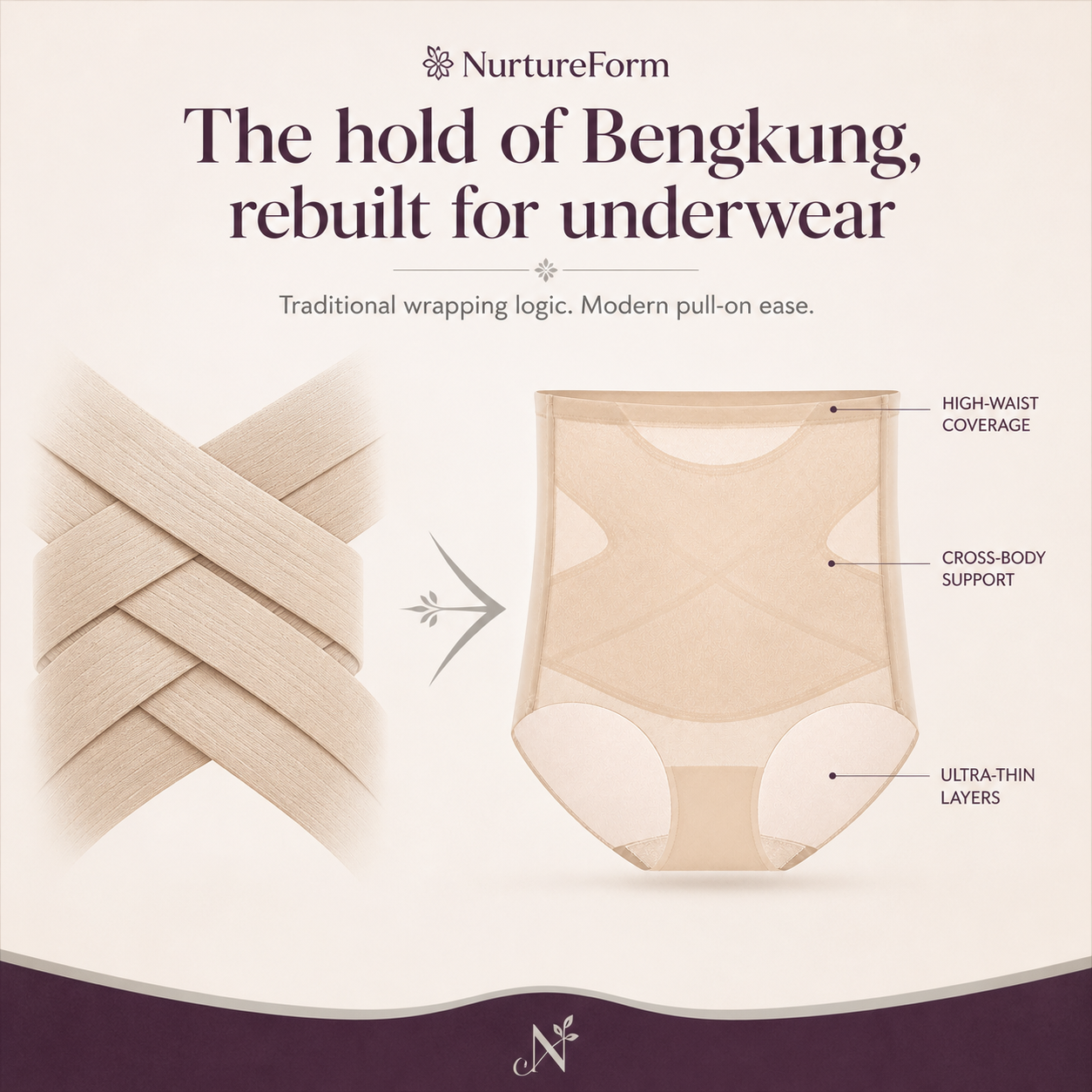
Crossed pathways can distribute a held feeling across the front rather than relying on one blunt band. That is the design idea behind NurtureForm’s X Matrix: support arranged diagonally through the garment, not another detachable layer strapped over your underwear.
The older idea that inspired a more wearable one
Bengkung is a Malay postpartum belly-binding tradition built around long, overlapping passes of fabric. Its arrangement is different from a single flat band: the wrapping pattern crosses the torso repeatedly, creating a sense of wraparound support.
NurtureForm does not ask you to perform that traditional wrapping ritual. Instead, it borrows the design logic of crossed pathways and rebuilds it inside a familiar, pull-on brief.
Malaysian research documents Bengkung as a traditional postpartum practice. That tradition is the inspiration for the arrangement of NurtureForm’s support pattern.
How X Matrix Compression changes the experience
The NurtureForm X Matrix Postpartum Brief uses integrated diagonal support pathways across an ultra-thin high waist. There is no separate wrap to fasten over your underwear, no tying ritual and no bulky external panel to hide beneath another layer.
The goal is not aggressive “snap back” pressure. It is a familiar brief that gives you an externally supported, smoothly held feeling while you wear it.
- When you sit: no separate outer wrap to unfasten and rebuild.
- When you get dressed: the support pattern lives inside the underwear silhouette.
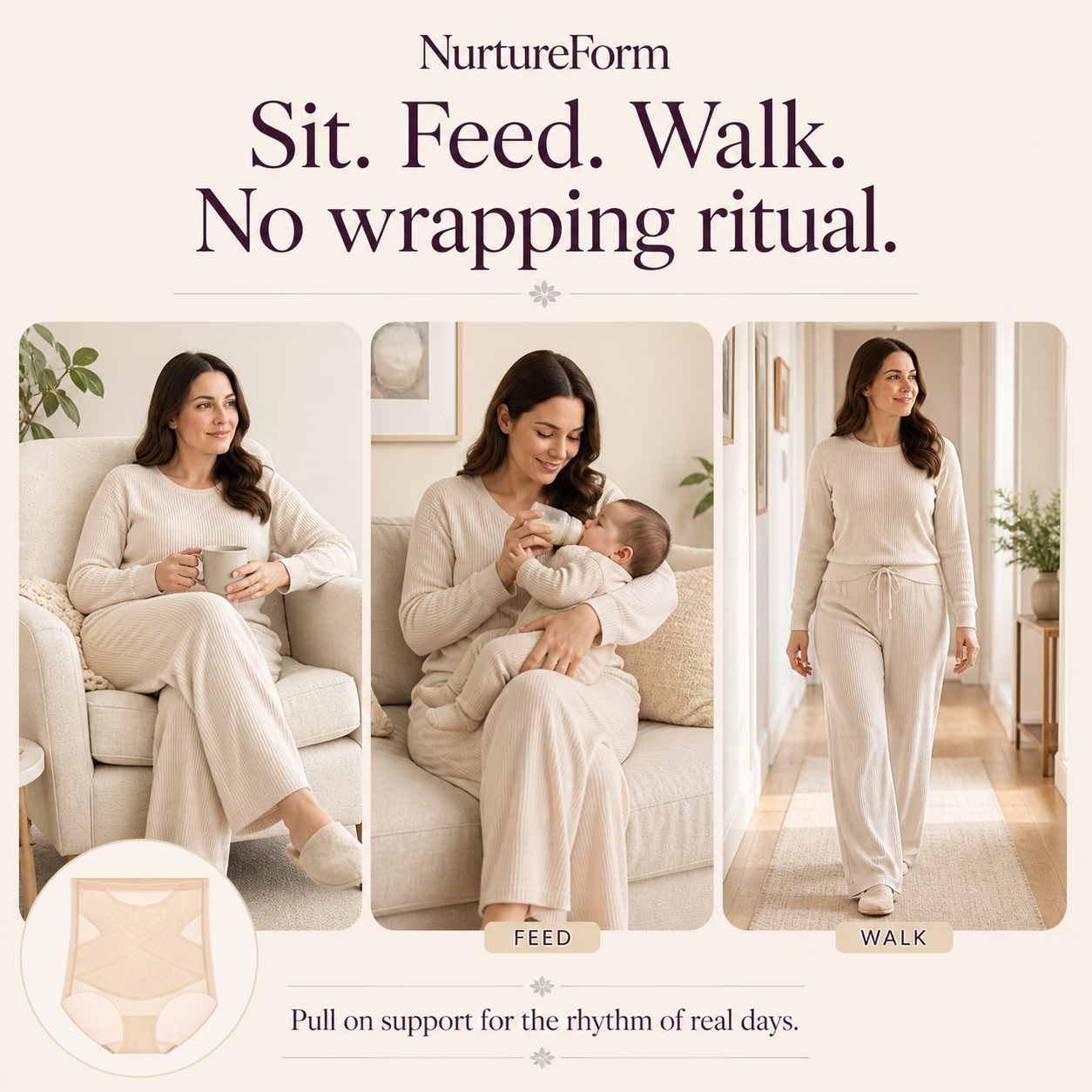
- When the day changes: you can feed, stand, walk and move without a wrapping ritual between each moment.
What that looks like in a real day
It may be school drop-off with an older child, a quiet feed on the couch, a short walk around the block or the first time you put on an outfit that feels like you again. The brief is designed to move through those ordinary moments without announcing itself as a separate recovery device.
That is the real promise: not a permanent reshaping claim, but support that is easier to keep wearing because it fits into the clothes and routines you already have.
Is this the kind of support you have been looking for?
The X Matrix brief may be a strong fit if you want a held feeling beneath everyday clothes, dislike obvious external wraps or have already learned that maximum squeeze is not what makes a product wearable.
It is currently available in Sand and Black. Rose and Ice Blue are sold out. The single brief is $29, with a Buy 2, Get 1 Free option for $49. Every order includes free tracked U.S. delivery and is covered by the 60-day comfort promise.
The NurtureForm X Matrix Postpartum Brief
Crossed support. Ultra-thin pull-on ease. Available in Sand and Black.
Explore the X Matrix brief · $29If you have had a C-section, another surgery or a postpartum complication, ask your care professional when compression garments are appropriate for you.